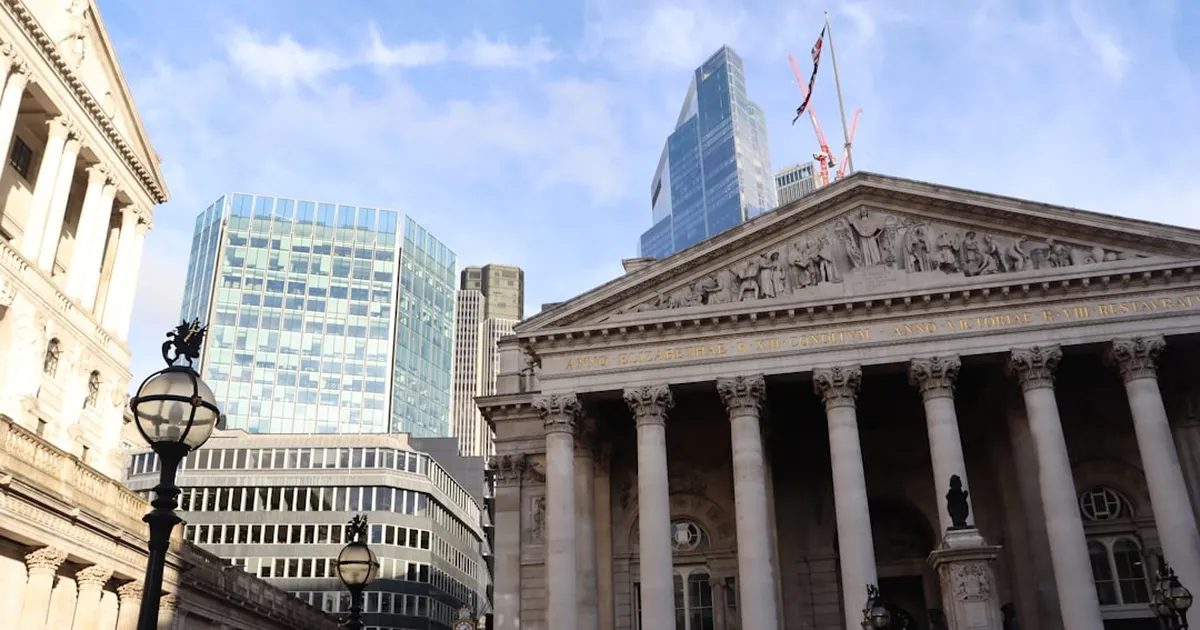
 Photo by Alicja Ziajowska on Unsplash
Budget tax rises loom, Trump's tariffs rattle markets, and back-to-school costs bite. Here's what today's UK finance news means for your money.
Photo by Alicja Ziajowska on Unsplash
From the threat of tax rises in the autumn Budget to Donald Trump's escalating economic brinkmanship and the very real cost of kitting out the kids for a new school year, Tuesday's finance headlines covered a lot of ground. Here's what the biggest stories mean for your wallet — and what, if anything, you should be doing about them right now.
Andy Burnham has declined to take tax increases off the table ahead of the government's first autumn Budget, with financial experts warning that he and Chancellor John Healey face a severely constrained set of options. The message from economists is blunt: with limited headroom and a long list of spending pressures — from public sector pay to infrastructure — the question is less whether taxes will rise, and more which ones.
For everyday consumers, the uncertainty is itself a problem. If you're weighing up whether to make a pension contribution, top up an ISA, or review your financial plan, the prospect of a shifting tax landscape makes it harder to plan with confidence. Historically, pre-Budget periods have seen changes to allowances on pensions, capital gains, and inheritance tax — all areas where acting sooner rather than later can lock in current, more favourable rules.
Watch out: If tax rises are announced in the autumn Budget, they could affect pension relief limits, ISA allowances, or capital gains tax thresholds. If you have significant savings, investments, or pension contributions planned, it may be worth speaking to a financial adviser before the Budget lands.
This is exactly the kind of moment where getting professional, regulated financial advice pays for itself. A qualified adviser can model how potential changes might affect your specific situation — rather than leaving you to react after the fact. See our guide to how pensions work and our ISA guide for background, or use Nesto to get matched with an FCA-regulated adviser who can look at your full picture.
Donald Trump's economic strategy continued to make headlines this week, with the US imposing 50% tariffs on a further $20 billion of Canadian goods and threatening the same rate on cars, trucks, parts, and steel. Meanwhile, Treasury Secretary Scott Bessent has been warning Iran's trading partners — including Chinese banks and refineries — that they risk exclusion from the US financial network. To cap it off, the US Treasury stepped in to try to suppress rising bond yields, caused in part by the mounting cost of war, tariffs, and large-scale tax cuts for the wealthy.
For UK consumers, this might feel like a distant geopolitical drama — but the ripple effects are real. Tariffs on car parts and steel push up manufacturing costs globally, which feeds through into the prices of new and used vehicles here in the UK. More broadly, if trade tensions escalate into a full US-China confrontation, global markets could see significant turbulence, which matters for anyone with a pension invested in equities or a stocks and shares ISA.
Keep perspective: Short-term market volatility driven by political events is normal. If you have a long investment horizon — say, more than ten years until retirement — staying the course is usually the right call. Knee-jerk reactions to news headlines are one of the most common (and costly) mistakes investors make.
The deeper concern flagged by analysts is that Trump's approach is eroding trust in the US dollar and US financial institutions as reliable, politically neutral anchors of global trade. If other nations respond by slowly diversifying away from dollar-denominated assets, UK interest rates and the pound could both be affected over the longer term. This is a story worth watching, even if immediate action isn't required. See our pension consolidation guide if you're wondering whether your retirement savings are well-positioned for an uncertain global environment.
It's that time of year again. As the new school term gets under way, the financial squeeze on families is acute. Uniforms, shoes, stationery, PE kit, and packed lunch supplies can add up to hundreds of pounds per child — and for families with more than one child, the burden can be genuinely serious. The BBC's coverage highlights that there are practical options available, from baby banks offering free or low-cost clothing and supplies, to supermarket deals on uniform essentials.
It's worth knowing that many local councils still offer school uniform grants, though eligibility criteria vary widely. Free School Meals eligibility has also been extended in some areas, and several major supermarkets — including Aldi, Asda, and Tesco — run significant back-to-school promotions in August and early September. Buying uniform pieces as own-brand rather than branded items can cut costs dramatically without your child being any the worse off.
Tip: Check your local council's website for uniform grants or hardship funds — many families who qualify don't apply simply because they don't know the support exists. Charities such as Turn2Us and local food banks often hold clothing exchanges too.
Longer term, the pressure of back-to-school spending is a useful nudge to review your household budget and emergency fund. If regular seasonal costs — Christmas, school terms, MOTs — routinely catch you off guard, building a small dedicated savings pot for these predictable expenses can dramatically reduce financial stress. Our ISA guide covers easy-access cash ISAs, which can work well as a tax-efficient short-term savings pot for exactly this kind of planned spending.
A story in the Guardian's Money section this week highlighted a troubling situation: a parish church treasurer has been unable to access £5,500 held in a closed Lloyds account since March, leaving the organisation unable to pay for essential repairs or settle an electricity bill. The problem stemmed from Lloyds closing the old account and requiring a new business account to be opened online — but a technical fault on Lloyds' own system prevented this from happening, leaving the money effectively frozen for months.
While this case involves a charity account, the underlying issue is one that affects individual customers too. Banks do have the right to close accounts, but they are required by the Financial Conduct Authority (FCA) to handle the process fairly and promptly, including returning any remaining balance. If your bank closes your account — personal or business — and fails to transfer your money within a reasonable timeframe, you can escalate first to the bank's formal complaints process and then, if unresolved within eight weeks, to the Financial Ombudsman Service (FOS), which is free to use and has real teeth.
Warning: If you receive a notice that your bank account is being closed, act quickly. Open a replacement account elsewhere immediately, redirect any direct debits and standing orders, and keep a paper trail of all correspondence. Don't assume the bank will handle the transition smoothly on your behalf.
Today's stories share a common thread: uncertainty — about tax, about global trade, about the reliability of institutions we depend on. Here's what we'd suggest you do in practical terms:
As ever, the best financial decisions are the ones made with good information and, where possible, professional guidance. If any of today's stories have raised questions about your own finances, Nesto can match you with an FCA-regulated financial adviser who can help you make sense of it all.
Get matched with an FCA-regulated adviser in under 2 minutes. Free, no obligation.
Find my adviser — it's free →Trusted by thousands of UK consumers • 5-star rated • 100% free