 Photo by Maxim Hopman on Unsplash
Global stock markets wobble, the AI debt bubble raises alarm bells, and over-50s struggle to find work. Here's what it all means for your money.
Photo by Maxim Hopman on Unsplash
From wobbling global stock markets to a growing crisis facing older workers, yesterday's UK finance headlines carried some serious warnings for everyday consumers. Whether you're invested in the markets, approaching retirement, or simply wondering what the AI frenzy means for your savings, here's what you need to know — and what you can do about it.
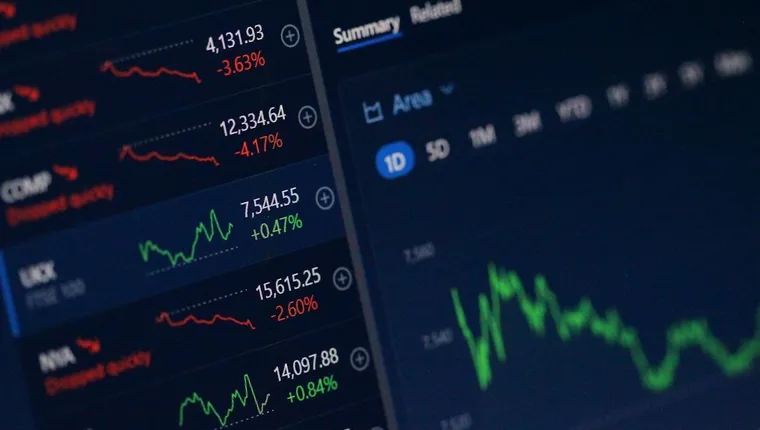
After a buoyant summer in which the US stock market hit fresh all-time highs, the mood has shifted sharply. According to the Guardian, a combination of intensifying conflict in the Middle East, a slowdown in the AI investment race, and rising government bond yields has thrown financial markets into renewed turmoil. The warning lights, as one analyst put it, are now flashing red.
For UK consumers, this matters even if you've never bought a share in your life. If you have a workplace pension, a stocks and shares ISA, or any investment-linked savings product, your money is almost certainly exposed to global equity markets. A sustained market downturn can erode the value of those pots — sometimes significantly. The concern right now isn't just one problem but a confluence of several: geopolitical risk, overvalued tech stocks, and a bond market that analysts describe as being in "tinderbox conditions."
Watch out: Rising government bond yields don't just affect investors — they can push up the cost of borrowing, including mortgage rates. If you're on a tracker or variable rate mortgage, or due to remortgage soon, keep a close eye on how bond markets develop over the coming weeks. See our remortgage guide for more on how to protect yourself.
The key takeaway for most people is not to panic-sell investments during volatile periods — history shows that knee-jerk reactions to market drops often do more damage than the dip itself. However, now is a sensible moment to review whether your investment portfolio matches your risk tolerance and time horizon, particularly if you're within five to ten years of retirement.
Closely linked to the market jitters is a more specific concern: the sheer scale of debt being used to fund the global AI spending spree. Writing in the Guardian, Heather Stewart flags that even setting aside fears about AI's existential risks, a collapse of the AI investment bubble would have serious repercussions far beyond Silicon Valley. Tech firms have been borrowing enormous sums to build out data centres at a breakneck pace — and if the returns don't materialise quickly enough, that debt becomes a problem for the whole financial system.
Meanwhile, a separate Guardian investigation reveals the extent to which Donald Trump's family and political allies have been enriching themselves through AI-linked defence and technology ventures — with Trump's sons reportedly securing a $620 million Pentagon loan, a Marine Corps robotics contract, and an undisclosed air force drone deal in the past year alone. While this is a US story, it underlines just how politically entangled and potentially unstable the AI sector has become. When politics and enormous sums of speculative capital mix, the risk of a disorderly unwinding rises sharply.
Tip: If a significant portion of your investments or pension is concentrated in technology or AI-linked funds, this is a good moment to speak to a financial adviser about diversification. A well-diversified portfolio is your best defence against sector-specific bubbles. Our ISA guide covers how to spread risk effectively across different asset classes.
OpenAI's claim to have solved the Navier-Stokes mathematical problem — one of the most complex unsolved challenges in mathematics — also made headlines this week, but the announcement has sparked an "existential crisis" among mathematicians who question both the methodology and whether sufficient credit was given to human researchers. The episode is a reminder that AI's capabilities, while impressive, remain contested — and that the hype driving billions of pounds of investment may be running ahead of reality.
In a deeply personal letter published by the Guardian, Peter Wade — a 60-year-old former debt and housing advice worker — describes having stopped applying for jobs after more than two years of unemployment. His story reflects a growing and underreported crisis: older workers, particularly those in their late 50s and early 60s, are being effectively shut out of the labour market at precisely the moment they most need income to see them through to state pension age.
Wade recounts working with a client who had been a hospital cleaner in her late 50s — a woman who had expected to retire earlier but was caught out by the changes to women's state pension age. Unable to continue the physical demands of her job, yet facing years before she could claim her pension, she found herself in an impossible position. Today, Wade finds himself on the other side of that desk. His story is not unique: the Guardian's earlier reporting described over-50s feeling "invisible" in the jobs market, facing rejection after rejection despite decades of experience.
Important: If you're in your 50s or early 60s and facing redundancy or long-term unemployment, your retirement plans may need urgent review. Gaps in National Insurance contributions can reduce your state pension entitlement, and drawing down pension savings too early can be costly. Seek regulated financial advice before making any decisions about your pension.
The financial implications of this trend are significant. People forced out of work in their late 50s may be compelled to access their pension pots earlier than planned, potentially triggering tax charges and reducing the long-term value of their retirement savings. If you're in this position, or approaching it, understanding your options — from pension consolidation to equity release — is essential. See our guide to how pensions work and our pension consolidation guide for practical steps you can take. If you own your home, our equity release guide explains another option that some older homeowners explore — though it comes with its own risks and should only be considered with professional advice.
This week's news is a reminder that financial uncertainty rarely arrives from just one direction. Right now, UK consumers face a challenging combination of volatile markets, a potentially overheated AI sector, rising bond yields, and a labour market that is failing older workers at a critical stage of their lives. Here's what we'd recommend:
Nesto matches UK consumers with FCA-regulated financial advisers who can help you navigate uncertain markets, plan for retirement, and make the most of your savings. Find your adviser today — it's free to get matched.
Get matched with an FCA-regulated adviser in under 2 minutes. Free, no obligation.
Find my adviser — it's free →Trusted by thousands of UK consumers • 5-star rated • 100% free